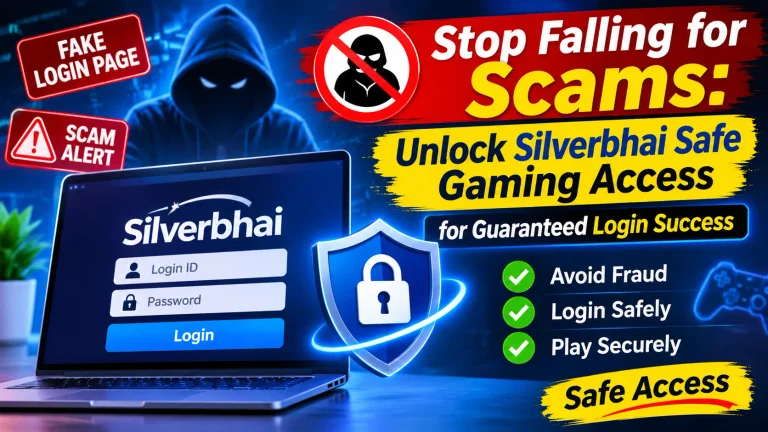
Silverbhai- Account Security and Personal Data Protection Online

Introduction
Personal data has become an important part of everyday digital life. People use online accounts for communication, shopping, entertainment and many other activities. Each account may contain information that should remain private, including email addresses, phone numbers, account details and transaction records.
When researching Silverbhai or any other online gaming-related service, users should understand how account security works before sharing information. A secure account depends on several factors: strong passwords, protected devices, safe browsing habits and responsible handling of personal data.
This article explains common account-security risks and practical steps that can help users protect themselves. It provides general digital-safety information and does not verify or endorse any particular website.
1. Why Account Security Matters
An online account can contain more information than users realise. Even a basic profile may reveal a person’s contact details, activity history or preferences. If an account is accessed by an unauthorised person, that information could be misused.
For users researching Silverbhai, the first question should be what information an account requires and why. A website should explain its data practices clearly. If the purpose of collecting information is unclear, users should avoid submitting it until they understand the request.
Account security is not only the responsibility of the website. Users also need to protect their login details and devices. Good security habits reduce the chances of unauthorised access.
2. Use a Unique and Strong Password
A password is often the first layer of protection for an online account. Weak passwords such as common words, simple number sequences or personal dates can be easier to guess.
Create a different password for every important account. A longer password or passphrase is generally easier to remember and harder to guess than a short, predictable combination.
Avoid using the same password for Silverbhai-related accounts and personal email, banking or social media accounts. If one password is exposed, unique credentials help prevent the problem from spreading to other services.
A reputable password manager can generate and store passwords. Protect the password manager itself with a strong master password and additional verification where available.
3. Enable Multi-Factor Authentication
Multi-factor authentication adds an extra security step during login. Depending on the service, this may involve an authenticator application, a security key or another verification method.
This additional step can help protect an account even if its password becomes known to someone else. However, users must still protect their verification methods.
Never disclose one-time passwords or authentication codes to callers, messages or people claiming to be support representatives. Scammers may pretend that a code is needed to verify an account, reverse a transaction or solve a technical problem.
A legitimate security process should not require you to reveal a private authentication code to another person.
4. Review Privacy Policies Before Sharing Data
A privacy policy explains how a website handles personal information. It should describe the categories of data collected, the reasons for collection, how long information may be retained and whether it may be shared with service providers or other parties.
Before submitting details to a website associated with Silverbhai, read its privacy policy carefully. Pay attention to information about identity verification, cookies, analytics, marketing communications and data deletion requests.
If the policy is vague or difficult to locate, do not assume that your information will remain private. Consider whether the website provides enough transparency for you to make an informed decision.
Remember that a privacy policy is not proof that every data practice is safe. It is a document users should examine and compare with the actual information requested.
5. Avoid Public and Untrusted Networks
Public Wi-Fi networks can create security risks, particularly when users connect to unknown or unsecured networks. Fake hotspots may be created to imitate legitimate networks and collect information from connected devices.
Avoid accessing sensitive accounts through public networks whenever possible. If you must use public Wi-Fi, do not ignore browser security warnings and avoid submitting sensitive information.
Keep your device’s operating system, browser and security applications updated. Software updates often include fixes for vulnerabilities that attackers may otherwise exploit.
Do not install unknown applications or browser extensions simply because a website recommends them. Check the publisher, permissions and reputation before installing anything.
6. Identify Phishing Attempts
Phishing is a technique used to trick people into revealing private information. A message may imitate a familiar company, use a copied logo or claim that an account will be blocked unless the recipient clicks a link.
When a message mentions Silverbhai or another online service, check the sender and website address carefully. Watch for spelling mistakes, unusual domains, unexpected attachments and urgent requests.
Do not click suspicious links. Open a new browser window and independently locate the official contact or support information instead.
If a message asks for your password, banking PIN or one-time password, treat it as suspicious. Do not reply with private information.
7. Be Careful With Identity Documents
Some online services may request identity verification. Users should understand why a document is required, how it will be processed and whether the request is consistent with the website’s published terms.
Do not upload identity documents through an unverified link or send them to an unknown social media account. Check the domain and the organisation’s identity first.
Where legally and practically appropriate, use only the information required for the stated purpose. Avoid sending additional documents or personal details that have not been requested through a verified process.
8. Monitor Account Activity
Review account activity periodically. Look for unfamiliar login alerts, password-reset messages, profile changes or transactions that you do not recognise.
If a service offers login notifications or session management, use those features. Sign out of devices you no longer use and avoid remaining logged in on shared computers.
For any account connected to payment activity, review transaction records through the official bank or payment application. Keep receipts and reference numbers in a secure location.
9. Respond Quickly to a Security Incident
If you believe an account has been compromised, act quickly. Change the password from a trusted device, secure the email account associated with it and enable multi-factor authentication.
If you reused the exposed password elsewhere, update those accounts too. Contact the relevant service through independently verified support details.
For suspected financial fraud in India, contact your bank or payment provider promptly and use official government cybercrime reporting channels where appropriate. Keep evidence such as messages, phone numbers, payment references and dates.
Conclusion
Account security depends on consistent habits rather than one single feature. Strong passwords, multi-factor authentication, careful browsing and informed data sharing all contribute to better protection.
Anyone researching Silverbhai should examine the website’s privacy information and account requirements before submitting personal details. Never share passwords or verification codes, and respond quickly if you notice suspicious activity. Taking a few minutes to check security can help prevent problems that may be difficult to resolve later.